
Why the June 2026 fuel-cost shock shows that resilience depends on substitute options, not installed megawatts
| June 2026 exposes Pakistan’s real energy-security problem: import-exposed sources supplied 24.8 percent of generation but absorbed 72.6 percent of the reported fuel bill. Resilience therefore depends less on adding megawatts than on creating low-cost substitutes at the hour and location of stress. |
Pakistan’s grid generated 13,431 GWh in June 2026. Hydel supplied 39.03 percent, nuclear 13.40 percent, domestic coal and gas 16.56 percent, and wind, solar and bagasse another 6.20 percent. Roughly three-quarters of output therefore came from domestic or zero-fuel sources. Yet the average reported generation cost was Rs8.9885/kWh and the effective fuel cost of electricity delivered to DISCOs was Rs8.9138/kWh – Rs1.20 above NEPRA’s June reference of Rs7.7138/kWh. The same month looked resilient by volume and fragile by cost.[1]
That contradiction is the starting point for a more useful concept of energy security. Pakistan will not become independent of international energy markets: it will continue to import oil, selected fuels, technology, capital and critical equipment. The practical objective is to ensure that disruption in one route, fuel, contract or technology does not become a macroeconomic emergency.
Strategic optionality is the ability to change course without destroying value. It rests on four qualities: diversity of supply and technology; flexibility in dispatch and demand; substitutability between fuels, routes and services; and recoverability after a shock. Installed megawatts matter, but only if the system can use, replace or repurpose them at tolerable cost.
The cost of the missing substitute
NEPRA’s CY2026 determination projects a total power purchase price of Rs3.186 trillion for 125.8 TWh. Capacity and use-of-system charges account for Rs2.163 trillion, or about 68 percent; fuel and variable O&M account for about 32 percent. The national-average power purchase price is Rs25.32/kWh, while the national-average energy purchase price is Rs8.13/kWh. This is the system’s rigidity tax: large fixed obligations remain before an external fuel shock arrives.[2]
June’s dispatch shows how fuel risk sits on top of that fixed burden. Imported coal, HSD, RFO, RLNG and electricity from Iran supplied only 24.80 percent of generation but absorbed 72.61 percent of the reported generation fuel bill. RLNG alone produced 11.02 percent of electricity and accounted for 43.53 percent of fuel cost. A quarter of output can therefore dominate the monthly adjustment when the system lacks a cheaper substitute at the hours those plants are needed.[3]
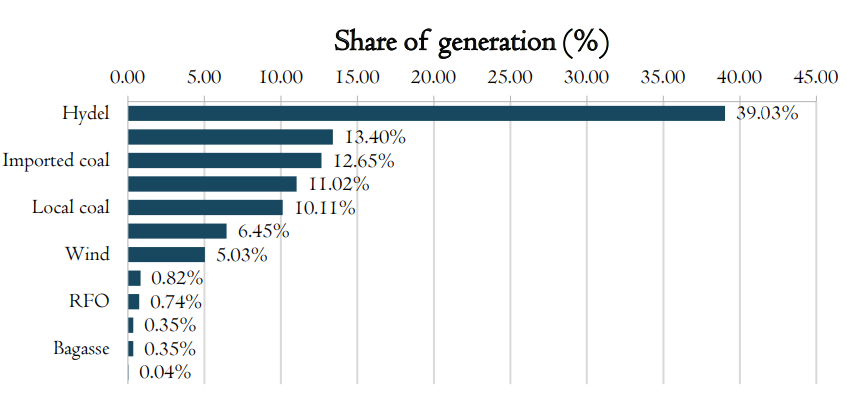
Figure 1. June generation was diverse by volume but concentrated by fuel exposure
Source: CPPA-G, XWDISCOs Energy Purchase Data – June 2026. Shares are calculated from reported generation.
The implication is not that imported energy should be prohibited. Imports can improve reliability and discipline domestic monopolies. The vulnerability arises when an imported source is simultaneously expensive, indispensable at the margin and protected by an inflexible contract. Optionality requires storage, responsive demand, multiple suppliers, interruptible procurement and enough network capability to move lower-cost electricity to the point of stress.
The same distinction applies to hydel, wind and solar. Their reported fuel component may be zero, but their system value is not automatic. A megawatt available at noon is not a substitute for a megawatt required after sunset; hydrology cannot be dispatched independently of water constraints; and a congested line can strand low-cost generation. Energy security is therefore a property of the system, not a label attached to a technology.
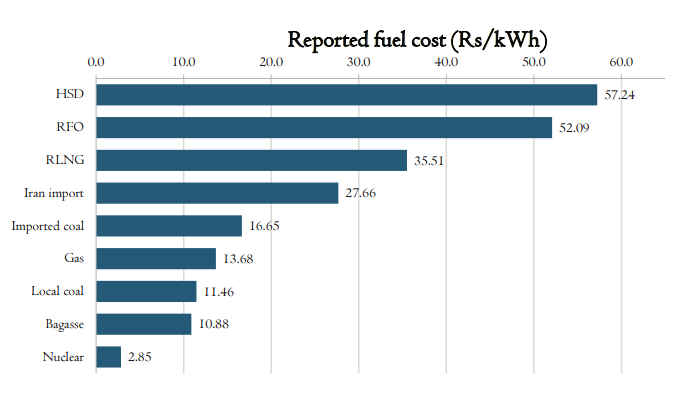
Figure 2. The fuel-cost component differs by a factor of twenty
Source: CPPA-G, XWDISCOs Energy Purchase Data – June 2026. Fuel cost is not the full tariff; zero-fuel entries are omitted.
Solar the planners cannot see
Pakistan’s fastest-growing source of electricity increasingly sits outside the dispatch stack. Planners observe power entering and leaving the grid, but much of the generation behind household, commercial and agricultural meters is inferred rather than measured in real time. Gross demand may therefore rise while net grid demand stagnates because rooftop photovoltaic systems serve load before the meter records it. NEPRA’s CY2026 determination reflects this uncertainty: net generation in January-September 2025 increased by only 0.51 percent year on year, and the Authority accepted demand growth of just 1 percent for 2026 after accounting for net-metering, captive supply and changing grid drawal.[4]
The Prosumer Regulations 2026 changed the economics of this hidden generation. Imports from the grid and exports by a prosumer are now settled separately, raising the value of self-consumption relative to export. For a household with capital, the rational response is to add a hybrid inverter and batteries, minimize evening imports and, at the limit, build a largely autonomous system. That may be privately efficient but systemically awkward: generation and flexible demand disappear further behind the meter, while the grid must still provide backup during prolonged cloud cover, equipment failure or seasonal peaks.[5]
The technical issue is the duck curve, not an annual shortage of energy. As distributed solar expands, net demand falls around midday and rises steeply after sunset. Pakistan must then move from a low daytime operating point to the evening peak over a short interval. That ramp interacts with nuclear and hydel constraints, thermal minimum-loading levels, start-up costs and contractual obligations. Imported-coal units are poorly suited to repeated deep cycling, while RLNG plants can ramp but expose consumers to fuel and foreign-exchange volatility. Keeping conventional units online at minimum load preserves reserves but can reduce efficiency or force solar curtailment; shutting them too early risks evening ramp and reserve shortages. The duck is therefore a dispatch, reserve and contract-design problem before it is a solar problem.
Distribution networks face another problem. High rooftop penetration can cause voltage rise, reverse power flow, phase imbalance and protection failures. A feeder may have ample annual capacity but be unable to absorb simultaneous noon exports, then face a sharp evening peak when solar output falls. Without interval meters, inverter telemetry and feeder-level hosting-capacity studies, DISCOs see the symptoms only through losses, complaints or transformer failures. National rooftop capacity alone says little; location, timing and controllability determine system value.
The response should not make grid-connected solar unattractive and accelerate uncoordinated off-grid migration. Household net metering should remain available as a targeted instrument, linked to disaggregated battery energy storage and operational visibility. An unfirm noon export should not receive the same value as energy stored and delivered during the evening ramp. Time-differentiated credits, a modest availability payment for controllable battery capacity, and payment for verified voltage or frequency support would reward the service the grid needs. Participation should require smart inverters, interval metering and aggregator access within consumer-defined limits.
A durable settlement should price energy, network access, time of delivery and system support separately. Network users should contribute transparently to backup and balancing infrastructure, while storage-backed exports during constrained hours should earn more than surplus midday injections. This is more defensible than either universal one-for-one crediting or a bluntly low export rate.
Aggregators should combine household batteries, solar systems and flexible loads into virtual power plants. Their obligation should be measurable delivery against a dispatch instruction, supported by telemetry and settlement data, not a claim based on installed nameplate capacity. This would convert solar that is invisible to planners into a forecastable and procurable resource.
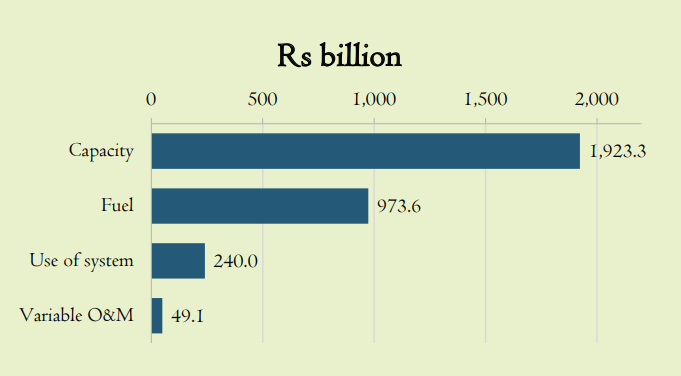
Figure 3. Fixed obligations dominate NEPRA’s CY2026 power-purchase forecast
Source: NEPRA, Decision on CPPA-G’s Power Purchase Price Forecast for CY2026, 7 January 2026. Figures are Rs billion.
Connectivity should be insurance, not another lock-in
Open access and wheeling are not side reforms. They are the institutional machinery that allows a generator, industrial load, storage project or aggregator to find an alternative counterparty when the incumbent arrangement is costly. NEPRA’s open-access framework and current wheeling work should therefore be judged by whether settlement, congestion pricing and credit support make trade usable in practice.[6]
Cross-border interconnection should be designed in the same way: as insurance rather than a new source of dependence. CASA-1000 can provide seasonal Central Asian hydropower, but future links should also permit short-duration balancing, interruptible imports and, where economics allow, exports. Capacity contracted in layers is more resilient than a permanent baseload take-or-pay obligation.[7]
Repurpose imported-fuel plants as storage infrastructure
Coal and thermal transition presents a similar choice. Early retirement is legally and financially complex where plants are protected by sovereign guarantees, debt covenants, power-purchase agreements and fuel commitments. A closure announcement does not extinguish those obligations. The starting point should be an asset-by-asset screen of heat rate, availability, remaining debt, minimum loading, ramp capability, grid location, workforce and interconnection value. NEPRA’s plant-performance evidence can identify where continued fuel-based operation is weak but the site remains strategically useful.[8]
Imported-coal and RLNG sites are strong candidates for staged conversion into battery-energy-storage and grid-service hubs. Their substations, high-voltage bays, evacuation lines, control rooms, access roads and technical staff can reduce storage deployment costs and lead times. Batteries at these nodes can absorb low-cost solar or hydel electricity, discharge during the evening ramp, provide reserves, support frequency and voltage, offer black-start capability and relieve congestion. At imported-coal plants, storage reduces dependence on inflexible units exposed to maritime fuel risk. At RLNG sites, batteries can handle short ramps and reserves, allowing gas turbines to be retained for longer emergencies rather than routine high-cost dispatch.[9]
Repurposing is not a one-for-one replacement of thermal MW with battery MW. Storage is energy-limited; value depends on both power in MW and duration in MWh, alongside cycle duty, degradation, charging source and network need. Site studies should optimise a defined service – such as evening shifting, fast frequency response or congestion management – rather than the retired plant’s nameplate. Refinancing can then exchange lower debt costs for reduced guaranteed availability, competitive storage procurement, interconnection-release milestones and worker-transition plans.
Policy matrix. A strategic optionality test for energy policy
| Intervention | Option created | Rigidity avoided | Immediate policy move |
| BESS at imported-coal and RLNG sites | Evening shifting, reserves and grid services | Stranded interconnection and fuel lock-in | Require a storage and grid-services assessment before rehabilitation or retirement |
| Household net metering plus BESS aggregation | Firm exports, peak reduction and local support | Invisible solar and unmanaged off-grid migration | Use time-based credits, telemetry and aggregator dispatch |
| Open access and wheeling | Alternative counterparties for generators, industry and storage | Single-buyer lock-in | Publish bankable settlement, congestion and credit-support rules |
| Regional interconnectors | Seasonal imports, exports and balancing | Baseload dependence on one corridor | Contract capacity in layers rather than as a permanent take-or-pay block |
| Fuel-risk stress testing | Pre-agreed substitutes when imported fuels spike | Monthly FCA surprises | Publish source-level output, cost concentration and replacement options |
| Transition refinancing | Lower debt service in exchange for flexible contracts and reuse rights | Sovereign-guarantee disputes and stranded sites | Link refinancing to dispatch flexibility, storage conversion and worker plans |
The test is deliberately practical: does an intervention create a usable substitute; can it respond within the time horizon of the shock; does it preserve valuable infrastructure; and is the fiscal exposure disclosed before the contract is signed?
A six-step policy sequence
Firstly, make distributed energy visible. NEPRA, ISMO and the DISCOs should establish a common registry of rooftop photovoltaic systems, batteries, inverter capabilities and feeder locations, with privacy-preserving access for planning and operations. Interval meters and standard telemetry should be phased in first on high-solar feeders. Forecasting must estimate gross demand and behind-the-meter production separately; otherwise every forecast error will be misread as weak demand or consumer non-compliance.
Secondly, redesign household net metering around time and firmness. A limited, rules-based facility should remain available to residential consumers that install compliant BESS and permit aggregated dispatch. Midday exports may receive the notified energy value, while evening or constrained-hour delivery should receive a higher credit. A small availability payment can remunerate batteries held for contingencies. The aim is not unrestricted one-for-one settlement, but payment for converting intermittent solar into a dependable service.
Thirdly, procure storage at the distribution level. Each DISCO should publish feeder hosting-capacity maps and identify locations where batteries can defer transformer reinforcement, manage reverse flows or reduce evening peaks. Competitive tenders should admit utility storage, independent operators and household aggregators. Payments should be based on verified availability and performance, with penalties for non-delivery. Storage would then be placed where it creates network value, not merely where land is cheapest.
Fourthly, launch a thermal-site repurposing programme for imported-coal and RLNG assets. NEPRA and the system operator should require a storage and grid-services assessment before approving major rehabilitation, life extension or retirement expenditure. It should disclose contractual liabilities, interconnection value and alternative roles. Where BESS is least-cost, refinancing and contractual amendment should be tied to competitive procurement, transparent milestones and workforce redeployment.
Fifthly, plan against net-load ramps rather than annual energy alone. The IGCEP and operational plans should publish representative hourly curves for high-solar weekdays, weekends, holidays and low-demand seasons, with uncertainty bands for behind-the-meter output. Resource adequacy tests should measure ramping, reserves, minimum generation and storage state of charge, not simply installed capacity against peak demand. This would turn the duck-curve debate into a measurable procurement requirement.
Finally, separate network equity from solar suppression. Consumers relying on the grid for backup should contribute transparently to network costs, but charges should reflect connection capacity and service use rather than penalise each self-generated unit. Lifeline consumers should be protected through explicit social policy, not opaque cross-subsidies that make grid electricity progressively less competitive. Stable rules will retain consumers on the grid; abrupt changes will encourage the wealthiest to leave first.
From fuel adjustment to national resilience
Pakistan operates three partially disconnected energy economies: a contracted grid, a rapidly expanding distributed-electricity system and an oil-dependent mobility and logistics system. Their risks are usually managed in separate plans even though the same shock can move through all three. A disruption to imported fuel raises generation costs, transport prices and foreign-exchange demand; high grid tariffs then accelerate rooftop solar and reduce sales available to recover fixed power-sector obligations. Strategic petroleum reserves can buy time, but only demand substitution – efficient freight, mass transit, electric two- and three-wheelers and managed fleet charging – can reduce the size of a prolonged petroleum shock. The same principle applies in electricity: storage and responsive load are valuable because they substitute for expensive marginal fuel at the hour of scarcity, not because they add another headline megawatt.
For exporters, resilience is increasingly a competitiveness requirement. Firms need predictable rather than merely subsidised tariffs, access to cleaner power through wheeling, credible emissions accounting and protection against abrupt fuel-cost pass-through. Industrial parks should be able to contract renewable supply, share storage and manage demand against transparent network charges. A grid that can observe and absorb distributed solar, batteries and regional trade is more valuable than one that simply holds a larger stack of contracted capacity, because it can deliver lower volatility as well as lower emissions.
Every major energy decision should therefore disclose five things: its fixed obligation, its substitute routes, the speed with which output or demand can change, the value of the site if the original technology is retired, and who pays when the demand forecast is wrong. June 2026 supplied the warning in numbers. Pakistan did not lack electricity; it lacked enough low-cost alternatives at the point of stress. Closing that optionality gap is the practical route from energy assets to economic resilience.
Khalid Waleed is a Research Fellow – Climate and Energy at Sustainable Development Policy Institute (SDPI)
[1] Central Power Purchasing Agency (Guarantee) Limited (CPPA-G), “XWDISCOs Energy Purchase Data – June 2026,” official FY2025-26 energy-purchase-data filing published by CPPA-G and used in NEPRA monthly fuel-charges-adjustment proceedings, July 2026.
[2] National Electric Power Regulatory Authority (NEPRA), Decision of the Authority on CPPA-G’s Power Purchase Price Forecast for Calendar Year 2026, 7 January 2026, paras. 24 and 36 and Annex I.
[3] Author’s calculations from CPPA-G June 2026 data. Imported coal, HSD, RFO, RLNG and electricity imported from Iran supplied 24.80 percent of generation but accounted for 72.61 percent of the reported generation fuel bill; RLNG alone accounted for 43.53 percent.
[4] NEPRA, Decision on CPPA-G’s Power Purchase Price Forecast for Calendar Year 2026, paras. 27-29. NEPRA reported net generation of 89,589 GWh in January-September 2025, compared with 89,130 GWh a year earlier, and accepted a 1 percent demand-growth assumption for 2026.
[5] National Electric Power Regulatory Authority (NEPRA), National Electric Power Regulatory Authority (Prosumer) Regulations, 2026, notified vide S.R.O. 251(I)/2026 on 9 February 2026, as amended by S.R.O. 547(I)/2026; see also S.R.O. 709(I)/2026 under Schedule IV and the NEPRA Technical Standards for Grid Connectivity Regulations, 2026, notified vide S.R.O. 693(I)/2026.
[6] NEPRA, National Electric Power Regulatory Authority Open Access (Interconnection and Wheeling of Electric Power) Regulations, 2022; see also NEPRA’s 2026 regulatory work on the wheeling auction process.
[7] World Bank, “Updated Q&A on CASA-1000 Resumption in Afghanistan,” 15 January 2026.
[8] NEPRA, State of Industry Report 2025, published 16 January 2026; and NEPRA, Performance Evaluation Report of Operational Power Plants 2024-25, published 26 February 2026.
[9] NEPRA, State of Industry Report 2025, published 16 January 2026; NEPRA, Performance Evaluation Report of Operational Power Plants 2024-25, published 26 February 2026; and International Energy Agency, Accelerating Just Transitions for the Coal Sector, on repurposing coal assets for flexibility and alternative economic uses.