Leadership
Since its establishment in 1957, the Pakistan Institute of Development Economics (PIDE) has been guided by leadership that has shaped its role as Pakistan’s premier institution for economic research and policy analysis. From its early years as an autonomous research institute supporting national economic planning, PIDE’s leadership has played a central role in safeguarding intellectual independence while maintaining constructive engagement with the state.
Over the decades, successive leaders have steered PIDE through changing economic and institutional landscapes—expanding its mandate, strengthening academic rigor, and aligning research with national priorities. The transition to degree-awarding status marked a significant leadership milestone, embedding academic governance alongside policy advisory functions. In recent years, institutional leadership has increasingly emphasized reform, accountability, and impact, focusing on strengthening systems, nurturing talent, and enhancing PIDE’s national and international relevance.
Today, PIDE’s leadership is defined by a forward-looking approach that integrates policy engagement, research excellence, and institutional reform, ensuring that the Institute remains responsive to Pakistan’s evolving development challenges while upholding its legacy of evidence-based inquiry and public service.
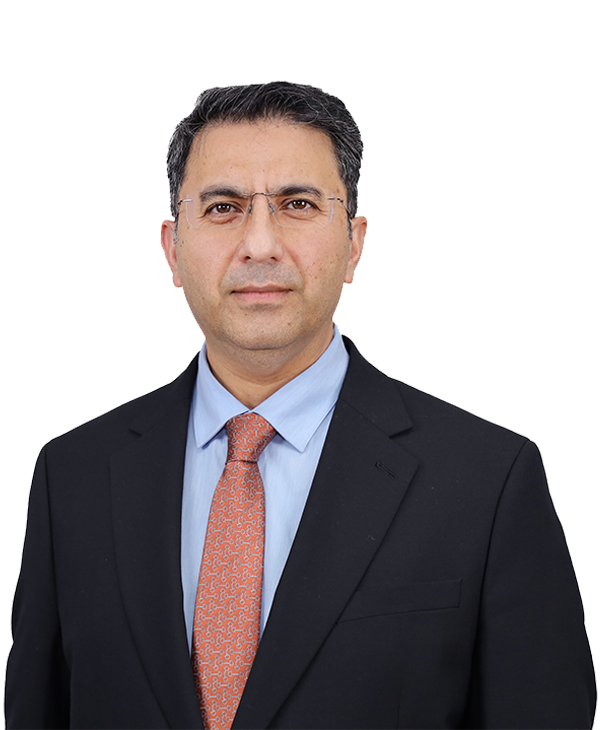
Dr. Nadeem Javaid (Sitara-e-Imtiaz)
Vice Chancellor, PIDE
With 25 years of experience spanning policymaking, central banking, academia, and Business strategy, he has played a pivotal role in shaping Pakistan’s economic landscape. His expertise in macroeconomic management, financial systems, Socioeconomic development, and institutional reforms has made him a key voice in Pakistan’s policy discourse. As Chief Economist of Pakistan, he advised the highest decision-making bodies, overseeing investment programming of 1,000+ development projects across infrastructure, energy, IT, governance, and the social sector, managing an annual development budget of Rs. 1,000 billion with a pipeline worth Rs. 8.5 trillion.
His leadership extended to crisis management, where he played a key role in the Post-Flood Damage Needs Assessment (PDNA 2022) and the Resilient Recovery, Rehabilitation, and Reconstruction Framework (4RF). Collaborating with provincial governments and international development partners, his efforts helped Pakistan secure over $10 billion in pledges at the Geneva Conference 2023 to support flood recovery. Previously, he led the preparation of Vision 2025, the 11th and 12th Five-Year Plans, the National Water Policy, and Pakistan Outlook 2035, and played a crucial role in shaping the CPEC Long-Term Plan, facilitating $60 billion worth of projects under the Belt and Road Initiative. For his exceptional contributions, he was honored with Sitara-i-Imtiaz in August 2023 for Public Service as a Technocrat.
- +92 51 9248024
- [email protected]